Identity sprawl
Users, service principals and privileged access need least-privilege governance.
Cloud security fails most often at identity and configuration: over-privileged accounts, misconfigured storage, no detection. We build security into the architecture: least-privilege access, posture management that catches misconfigurations, and detection that tells you when something's wrong. The aim is a posture you can defend and evidence you can show.
Too many alerts, too many accounts with too much access, and parts of the cloud no one watches. On top of that come rules such as NIST CSF 2.0, GLBA and CCPA.
Users, service principals and privileged access need least-privilege governance.
Leadership needs evidence-backed posture, not scattered manual checks.
SIEM programs need useful signals, tuned alerts and clear response ownership.
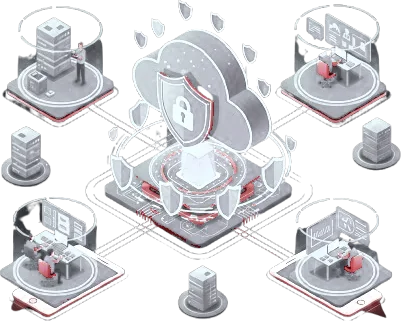
We connect identity, network, workload, data and detection controls into one practical operating model. The focus is measurable risk reduction, not security theater.
Identity-first access, least privilege, segmentation and device-aware control patterns.
CSPM with Defender for Cloud, Security Hub, SCC, policy assignments and remediation workflows.
Log onboarding, normalization, analytics rules, incident workflows and alert tuning.
Entra ID, AWS IAM, GCP IAM, SAML federation, access reviews and privileged access.
SOC 2 and NIST-aligned controls, evidence mapping and practical remediation plans.
Classification, retention, DLP planning and protection controls for sensitive data paths.
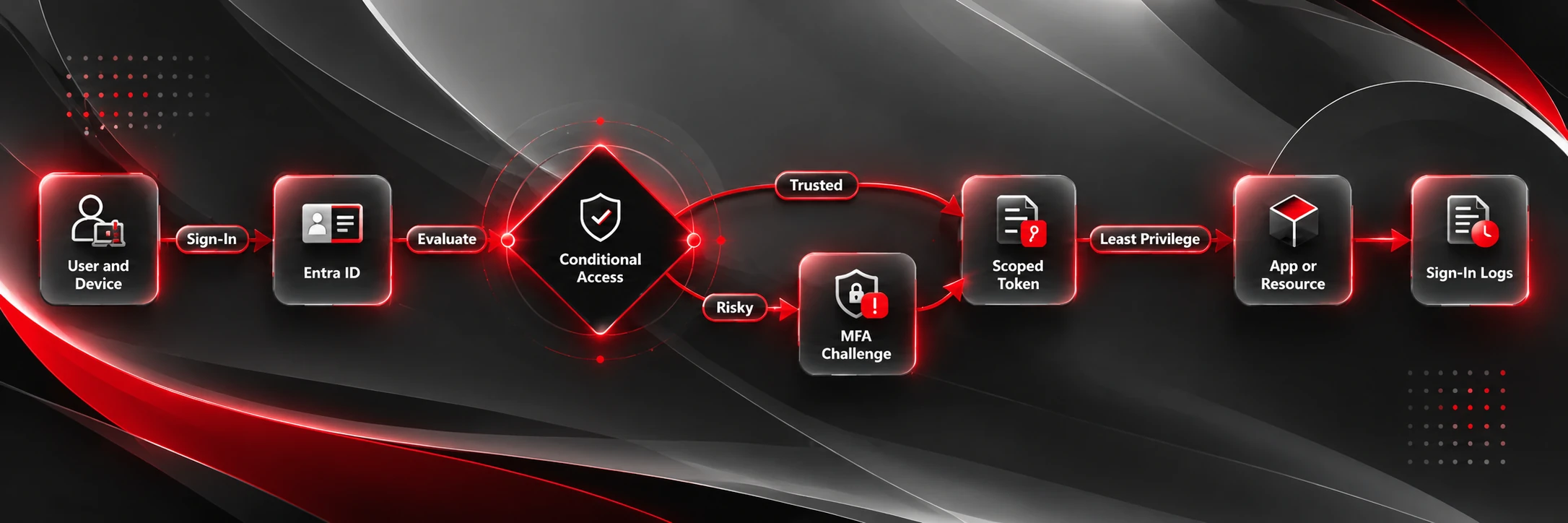
We bring all logs into one place, check each sign-in, spot threats as they happen and contain them fast with tested playbooks.
Identify the assets, access paths and exposure that matter most before choosing any control.
Apply least-privilege access, multi-factor authentication and conditional policies across users and service accounts.
Bring logs and signals from across the estate into one place teams can actually monitor.
Turn policy into enforced, repeatable guardrails instead of manual checklists.
Refine detection rules and playbooks so real incidents surface fast with less noise.
Each step ends with a written result and a clear yes or no before the next one starts.
We fix the biggest risks first, keep disruption low and leave controls an auditor can test.
Understand regulated data, critical systems, identities and existing control gaps.
Sequence improvements by impact, effort and operational readiness.
Use policy, logging and dashboards to make compliance easier to prove.
Reduce noise and strengthen response with useful telemetry and playbooks.
Leaders see the real threat picture. Risk goes down, and you can show you meet US security rules.
Security work is prioritized by exposure, business impact and operational readiness.
Policy, logs and remediation workflows make compliance easier to prove.
Sentinel, Defender and playbooks improve detection and response maturity.
Proven tools that find real threats and respond fast, in the cloud and on site.
Ongoing control checks and repeatable fixes, so you stay ready for SOC 2.
Read the storyShort answers on alert tuning, audits and handover to your team.
Overwhelmingly identity mistakes and misconfiguration, not exotic zero-days. We focus there.
Yes, a security assessment is a common, low-commitment starting point.
New to iNET SYSTEMS? Meet our founder, see how we work, read the FAQs or start with an AI Security Readiness Assessment.
Questions are not stored. Avoid sharing confidential information. Privacy Policy
