
Unpatched attack surface
Cloud workloads, endpoints and identities are exposed without consistent Defender coverage.
Defender spans a lot: Defender for Cloud (posture), for Endpoint, for Identity, for Office. We deploy the pieces you need as one coordinated layer, so a threat detected in one place informs the others. Defender for Cloud in particular gives you the continuous posture visibility that makes compliance frameworks like SOC 2 far less painful.
Too many alerts, too many accounts with too much access, and parts of the cloud no one watches. On top of that come rules such as NIST CSF 2.0, GLBA and CCPA.
Cloud workloads, endpoints and identities are exposed without consistent Defender coverage.
Leadership cannot see current posture or prioritized remediation work.
Defender findings pile up without a clear remediation and ownership workflow.
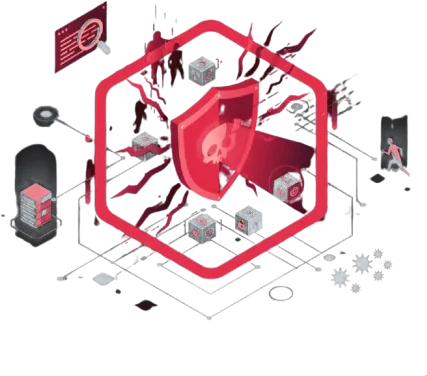
We deploy the pieces you need as one coordinated layer, so a threat detected in one place informs the others. Defender for Cloud in particular gives you the continuous posture visibility that makes compliance frameworks like SOC 2 far less painful.
Continuous posture visibility across cloud workloads and configurations.
Endpoint and identity threats correlated into one coordinated response layer.
Findings triaged by business risk, not raw alert volume.
An ongoing process for acting on findings instead of letting them accumulate.
We bring all logs into one place, check each sign-in, spot threats as they happen and contain them fast with tested playbooks.
Understand the business goal, current environment, risks and constraints before any design work begins.
Design the target operating model, controls and integration points so the solution fits how the business actually runs.
Build and configure the solution using repeatable, reviewed engineering practices, not one-off manual work.
Test against real scenarios and security requirements before anything reaches production.
Hand over documentation, runbooks and support so the client team can run the result with confidence.
Each step ends with a written result and a clear yes or no before the next one starts.
We fix the biggest risks first, keep disruption low and leave controls an auditor can test.
Review which workloads, endpoints and identities have Defender protection today.
Enable and tune Defender for Cloud, XDR and Endpoint across the estate.
Triage recommendations by business risk, not raw count.
Establish an ongoing process for acting on findings.
Leaders see the real threat picture. Risk goes down, and you can show you meet US security rules.
Defender for Cloud, XDR and Endpoint are configured and tuned across the estate.
Secure score findings are triaged by business risk, not raw volume.
A remediation workflow keeps findings moving instead of accumulating.
Proven tools that find real threats and respond fast, in the cloud and on site.
Ongoing control checks and repeatable fixes, so you stay ready for SOC 2.
Read the storyShort answers on alert tuning, audits and handover to your team.
Depends on your estate: we scope it rather than selling you all of them.
Defender for Cloud gives continuous control visibility, which is exactly what auditors want to see.
Defender for Endpoint deployment covers onboarding devices through Intune, Group Policy or Configuration Manager, attack surface reduction rules in audit mode first, next-generation protection and EDR in block mode, and alerts flowing into Defender XDR and Sentinel. Rollout happens in rings, starting with a pilot group, so problems show up before every device is enforced.
| Source and what it covers |
|---|
New to iNET SYSTEMS? Meet our founder, see how we work, read the FAQs or start with an AI Security Readiness Assessment.
Questions are not stored. Avoid sharing confidential information. Privacy Policy
