
No defined operating scope
It is unclear what is actively monitored or supported versus assumed.
Managed services should reduce your burden without turning your environment into a black box you can't see into. We run and improve your platforms under an agreed scope (monitoring, maintenance, incident response, regular reviews) while keeping you fully visible and in control. Not an outsource you regret; a partner who keeps things healthy.
Managing 24/7 incident response, timely security patching, uncontrolled cloud spend, and complex multi-platform estates.
It is unclear what is actively monitored or supported versus assumed.
Issues get attention only after something breaks, with no proactive review.
The environment runs the same way indefinitely, without a process for planned improvement.
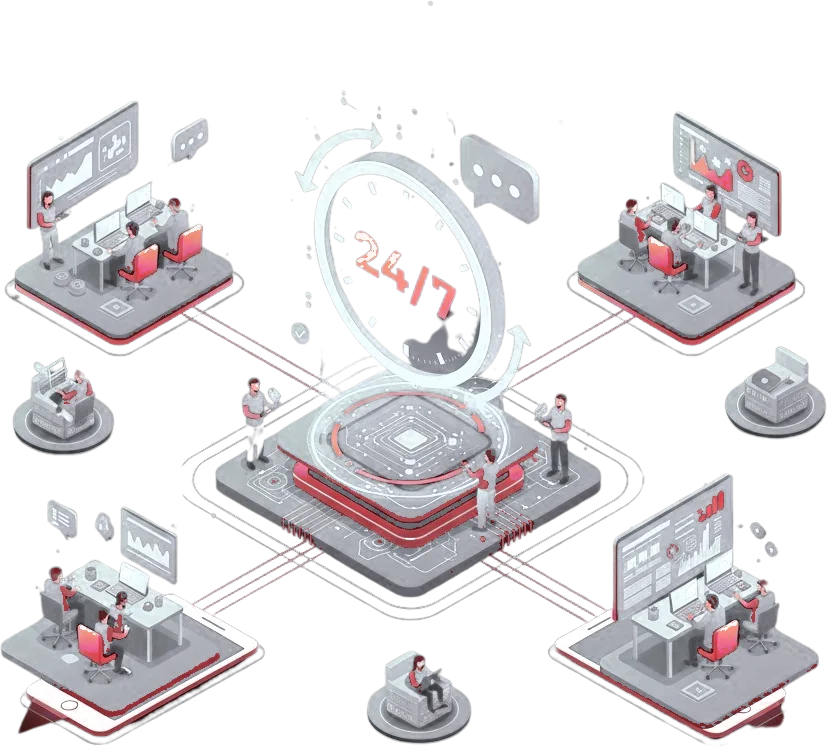
We run and improve your platforms under an agreed scope (monitoring, maintenance, incident response, regular reviews) while keeping you fully visible and in control. Not an outsource you regret; a partner who keeps things healthy.
Start with one area (cloud or security) and expand the scope over time.
Coverage scoped to your risk and budget, not a one-size package.
Documented response paths so incidents follow an agreed process.
Regular reviews that keep the platform improving, not just running.
Continuous health telemetry, automated alert deduplication, disciplined runbooks, and executive reporting visibility.
Understand the business goal, current environment, risks and constraints before any design work begins.
Design the target operating model, controls and integration points so the solution fits how the business actually runs.
Build and configure the solution using repeatable, reviewed engineering practices, not one-off manual work.
Test against real scenarios and security requirements before anything reaches production.
Hand over documentation, runbooks and support so the client team can run the result with confidence.
Every phase ends with a documented deliverable and a clear go/no-go decision before the next one starts.
Structured onboarding, baseline configuration hardening, 24/7 monitoring, monthly FinOps reviews, and regular posture reviews.
Agree on what is actively monitored and supported.
Document operational procedures before support begins.
Implement the agreed monitoring coverage.
Maintain a backlog for continuous improvement.
Free your core product team to innovate while certified engineers ensure uptime, security patching, and platform reliability.
Monitoring options and coverage are agreed and documented upfront.
Support follows documented runbooks instead of ad hoc response.
A maintained backlog keeps the environment improving instead of standing still.
Production-grade observability and automation platforms providing immediate alerting and reliable telemetry.
Clear information regarding support boundaries, response times, and handover expectations.
No: transparency is a condition, not an option. You see what we see.
Yes, many clients begin with one area (cloud or security) and expand.
Questions are not stored. Avoid sharing confidential information. Privacy Policy