
Fragmented environments
Cloud accounts, subscriptions and projects grow without a consistent identity, networking or policy model.
"Cloud services" covers a lot, so here's how we think about it: strategy and architecture first, a governed foundation second, migration onto it third, and operations to keep it healthy fourth. Skip the early steps and you get the expensive, drifting environment most teams end up regretting. We don't skip them.
Resolving inconsistent multi-account setups, unmanaged network egress, security drift, and unplanned cloud expenditure.
Cloud accounts, subscriptions and projects grow without a consistent identity, networking or policy model.
Teams need modernization without downtime, unclear rollback plans or unexpected security exposure.
Spend increases when governance, observability, backup posture and FinOps are not connected.
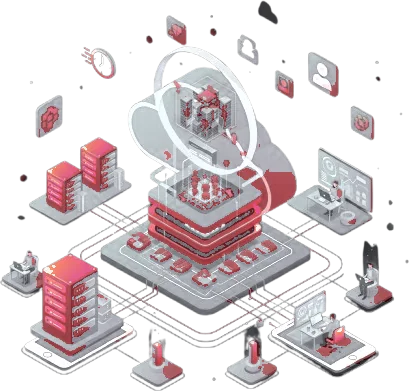
We design cloud environments that are scalable, governed, observable and repeatable through infrastructure as code. The result is a modernization foundation your teams can operate confidently after launch.
Standardized, production-grade cloud foundations across Azure, AWS, and GCP with identity federation, automated guardrails, and central logging.
Structured 6-R methodology (Rehost, Replatform, Refactor) with migration wave automation and near-zero downtime cutover.
Containerize legacy monolithic apps onto managed Kubernetes (AKS, EKS, GKE) and serverless architectures.
Centralized cloud cost intelligence, automated anomaly alerts, reservation planning, and waste elimination.
US data residency baselines aligned with NIST SP 800-53, CIS Controls, and NIST Privacy Framework regulations.
Modular Terraform/OpenTofu codebases and CI/CD pipelines stored directly in your repositories with zero vendor lock-in.
Architected with automated guardrails, hub-spoke network topology, policy enforcement as code, and central logging.
Inventory current workloads, dependencies and constraints before any migration or design work begins.
Define identity, networking, policy and governance so every environment starts from the same secure baseline.
Build environments as reviewed, version-controlled code instead of manual console changes.
Move workloads on a sequenced plan with rollback options, not a single high-risk cutover.
Hand over monitoring, cost visibility and runbooks so the platform keeps improving after go-live.
Every phase ends with a documented deliverable and a clear go/no-go decision before the next one starts.
Systematic workload assessment, automated Terraform deployment, cutover execution with rollback protection, and FinOps tuning.
Inventory current systems, constraints, risk, cost and migration readiness.
Define architecture, controls, operating model and delivery milestones.
Use infrastructure as code, CI/CD and documentation so environments can be reproduced.
Tune reliability, cost, security and team handover after launch.
Accelerate feature delivery across compliant infrastructure with US data residency built in.
Reusable landing zones make compliant environments faster to reproduce.
Monitoring, backup, policy and runbooks are built before production handover.
Teams understand who owns platforms, workloads, security controls and improvement cycles.
Built on leading enterprise cloud providers and automation platforms tested for mission-critical reliability.
One cloud base that every team reuses, so new setups are quick and stay in line.
Read the storyDirect answers regarding architecture choices, migration timelines, and operating ownership.
Depends on your workloads, team skills and existing contracts. We'll give you an honest recommendation, not a default.
Yes, most engagements start by improving what's already there.
Questions are not stored. Avoid sharing confidential information. Privacy Policy