
Manually managed infrastructure
Resources are created through consoles, making changes hard to track or repeat.
Click-built infrastructure can't be reproduced, reviewed, or trusted. We build it as code with Terraform: reusable modules, safe state management, and pipelines so changes get reviewed like any other code. The payoff: you can stand up an identical environment on demand, and drift stops being a mystery.
Eliminating fragile snowflake servers, slow manual releases, brittle scripts, and coordination overhead across engineering teams.
Resources are created through consoles, making changes hard to track or repeat.
Every team writes Terraform differently, with no shared patterns or reuse.
Terraform state is managed ad hoc, creating risk of drift or conflicting changes.
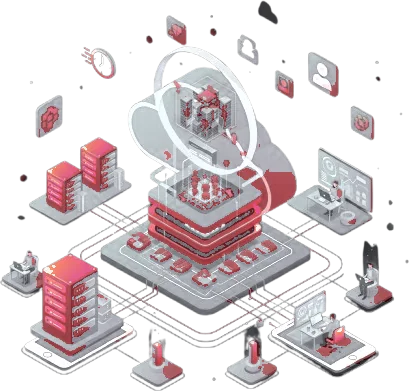
We build it as code with Terraform: reusable modules, safe state management, and pipelines so changes get reviewed like any other code. The payoff: you can stand up an identical environment on demand, and drift stops being a mystery.
Reusable, reviewable Terraform modules instead of one-off, click-built infrastructure.
Safe, shared state management so changes don't collide or get lost.
Guardrails enforced automatically so provisioning stays within agreed boundaries.
Infrastructure changes reviewed through the same pipeline as application code.
Architected around modular Infrastructure as Code, immutable container images, zero-trust network policies, and end-to-end telemetry.
Understand the business goal, current environment, risks and constraints before any design work begins.
Design the target operating model, controls and integration points so the solution fits how the business actually runs.
Build and configure the solution using repeatable, reviewed engineering practices, not one-off manual work.
Test against real scenarios and security requirements before anything reaches production.
Hand over documentation, runbooks and support so the client team can run the result with confidence.
Every phase ends with a documented deliverable and a clear go/no-go decision before the next one starts.
Standardizing Terraform modules, containerizing workloads with Kubernetes, automating release stages, and handing over runbooks.
Review what is manually managed versus already in code.
Define reusable Terraform module patterns and state strategy.
Implement modules and bring existing infrastructure under code management.
Connect Terraform to pipelines for controlled, repeatable changes.
Ship features safely multiple times a day with automated rollback, standardized developer environments, and comprehensive telemetry.
Environments are defined in Terraform instead of built by hand.
Shared module standards let teams provision consistently instead of starting from scratch.
A defined state strategy reduces the risk of drift or conflicting changes.
Production-proven open standards and cloud-native tools selected for maintainability, security, and developer ergonomics.
One cloud base that every team reuses, so new setups are quick and stay in line.
Read the storyPractical guidance on container adoption, pipeline automation, and operational ownership.
Terraform for multi-cloud and portability; native tools have their place too. We match the choice to your estate.
Common, we refactor into clean, reusable modules with proper state handling.
Questions are not stored. Avoid sharing confidential information. Privacy Policy