
 Governed AI Core
Zero Data Leakage
Governed AI Core
Zero Data Leakage
One key for everything
The pilot runs on a single API key or service account with broad access. No risk team will sign off on that in production.
Everyone has an AI proof-of-concept. Almost no one has AI in production doing real work, because the moment it needs access to real systems and data, security says no, and they are usually right to. Open-ended access with no audit trail and no clear owner is not a product. It is a liability.
Autonomous agents never access backend systems directly. Every action is mediated, scoped, human-approved when sensitive, and immutably audited.
Autonomous LLM worker operating under task-specific objectives. Generates tool call requests without direct system credentials.
                    const req = {

                      call: "crm:sync_account",

                      id: "cust_8921"

                    };
Central policy firewall mediating every agent interaction. Verifies identity, scopes privileges, intercepts injection attacks, and routes approved payloads.
Fine-grained, short-lived tokens restricted to the exact record and action requested.
Just-in-Time RBACSensitive or financial transactions are paused in real-time until authorized by designated personnel.
WORM tamper-evident telemetry tracking prompt, model output, identity, and execution timestamps.
Immutable TelemetrySalesforce / Dynamics 365 / Hub
SAP S/4HANA / Oracle Cloud ERP
Private Microservices & Data Mesh
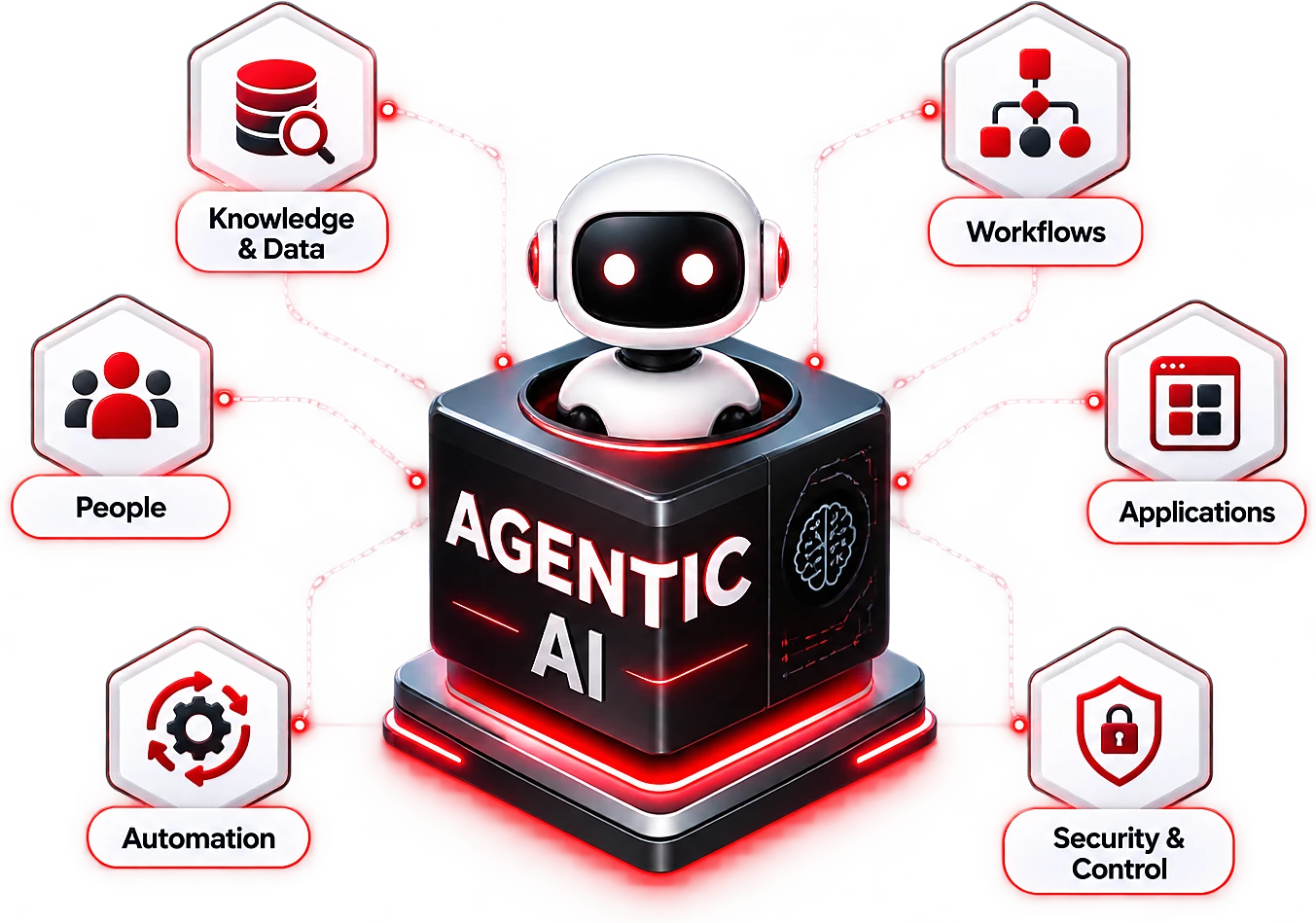
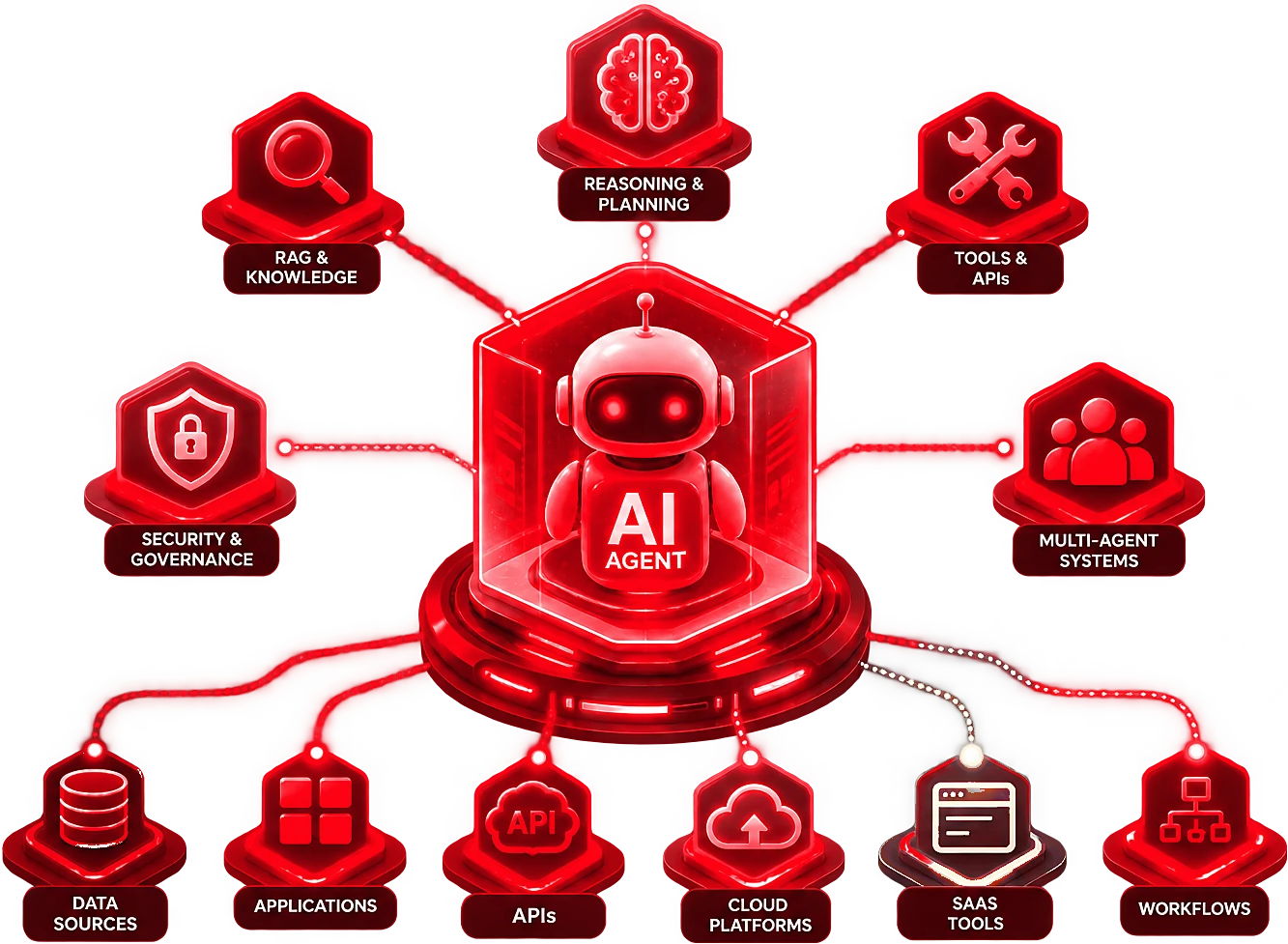

Most AI pilots work fine in a demo. They stall when someone asks what the AI can reach, who approved it, and how you would know if it did something wrong.
The pilot runs on a single API key or service account with broad access. No risk team will sign off on that in production.
If an agent changes a record or sends a message, nobody can say who triggered it, what it saw or why it acted.
AI surfaces whatever it can reach. If permissions are messy, it will show people files and data they should never see.
IT built it, the business uses it and security wasn't involved. When it breaks, nobody owns the fix.
We design AI that earns its way into production. Agents get least-privilege access to specific tools, every action is logged, and higher-risk actions sit behind human approval. Copilot and Azure OpenAI integrations connect to your data under real identity controls, not a blanket API key.
Move from pilot to production with a security model your risk team will actually approve. Least-privilege access, audit logging and human approval on sensitive actions are built in from day one, not added later as an afterthought.
Every tool an agent can touch gets its own scoped credential and approval rule. If it only needs to read a calendar, it can't send email or delete a record. Access expands as the agent earns trust.
Wire AI into the systems you already run, such as CRM platforms, ticketing tools and internal APIs, through governed connectors so it does real work instead of sitting in a demo. Nothing is open-ended by default.
Every agent action is logged with who, what and when. When something breaks at 2am, you can trace exactly what happened and roll it back instead of guessing.
Clear ownership, audit trails and controlled access to sensitive data, designed to support alignment with the NIST AI Risk Management Framework, the CCPA/CPRA and NIST cybersecurity controls.
Usage budgets per team and per agent, cost monitoring and the right model for each task. AI spend grows with value, not by surprise.
Every AI deployment we deliver ships with these controls from day one, so the security review becomes a walkthrough instead of a wall.
Each tool gets its own scoped credential. Read-only stays read-only.
Higher-risk actions such as sending, deleting or paying wait for a person to approve.
Every prompt, tool call and action is recorded with who, what and when.
Inputs and tool outputs are treated as untrusted and tested against manipulation.
Sensitivity labels, DLP and permission clean-up so AI only sees what the user is allowed to see.
Model endpoints stay inside your network boundary, not on the open internet.
AI acts under real user and workload identities, not shared keys.
Alerts on unusual behavior, and a clear path to trace and undo actions.
These services can be delivered independently or combined into a larger roadmap.
Enterprise agentic AI development: Model Context Protocol (MCP), tool-call authorization, human-in-the-loop gates, and CCPA/CPRA-compliant execution.
Build, evaluate and deploy enterprise AI on Microsoft AI Foundry with the governance, evaluation and monitoring production requires.
Deploy enterprise Azure OpenAI with Private Link, Entra ID authentication, content filtering, and hybrid RAG architecture aligned with US regulations.
Copilot readiness done right: clean up permissions first, so Copilot surfaces what people should see and nothing they shouldn't.
Custom MCP servers that connect AI agents to your APIs and data through governed, auditable, least-privilege interfaces.
Automate real business workflows with AI: safely scoped, monitored, and with humans in the loop where it matters.
Each industry brings different data, regulation and risk. We map AI use cases to the controls each one requires.
Citizen-service assistants and internal knowledge agents with strict data boundaries, role-based access and full accountability for every action.
Document review, KYC support and analyst copilots with human approval on decisions, complete audit trails and controls built for regulatory scrutiny.
Administrative and operational AI that keeps patient data protected, access tightly scoped and every interaction traceable.
Maintenance, operations and field-support agents that connect to operational systems without opening uncontrolled access to critical infrastructure.
AI features and internal agents shipped with evaluation, monitoring and least-privilege integrations, so customers can trust what the product does.
Microsoft Copilot readiness, secure knowledge search and document automation that respects client confidentiality and matter-level permissions.
Each phase has a clear output, so you know what you get before moving to the next.
Prioritize AI use cases by value and risk, and assess data readiness, existing permissions and the systems AI will need to reach.
Design the agent-to-tool access model, approval flows, data boundaries, identity integration and monitoring before any build begins.
Build governed connectors, MCP servers and integrations using reviewed, repeatable engineering and infrastructure as code.
Test with real scenarios, output evaluations, prompt-injection and red-team testing, and a security review before production sign-off.
Hand over audit dashboards, cost tracking, runbooks and escalation paths, with optional managed operations after launch.
Every phase ends with a documented deliverable and a go/no-go decision, so nothing reaches production without sign-off from your business, IT and security owners.
Identify high-value use cases, assess data and permission risks, and leave with a prioritized roadmap and a target architecture.
Best for: teams starting out or with scattered pilotsTake one use case from pilot to governed production, with access controls, approvals, audit logging and monitoring in place.
Best for: a pilot that is stuck in security reviewMonitoring, cost control, evaluation, access reviews and continuous improvement for AI systems already running in production.
Best for: teams scaling AI across departmentsCase studies are shared where details can be published without exposing confidential client information.
AI agents got only the tools they need, through one gateway, with every call logged.
Read the storyShort answers to common planning questions for AI Transformation.
No. With enterprise services such as Azure OpenAI and Microsoft 365 Copilot, your prompts and data are not used to train the underlying foundation models. We also configure access so AI only works with data the user is already allowed to see.
We design for US-region hosting where the required services are available, and we document exactly where data is stored and processed so your compliance team can review it.
Agents only get scoped access to specific tools, higher-risk actions require human approval, and every action is logged. If an agent only needs to read, it cannot write.
No. Microsoft 365 Copilot is available as an add-on to most business and enterprise plans. E5 adds stronger data protection and governance tooling, which we recommend reviewing as part of Copilot readiness.
It depends on scope and readiness, but a single well-defined use case typically moves from pilot to governed production in 8-12 weeks.
Yes. Delivery includes documentation, runbooks, audit dashboards and training. We can also provide managed operations if you prefer ongoing support.
Tell us what you're trying to build. We'll show you how to get it to production with controls your risk team will approve.
Questions are not stored. Avoid sharing confidential information. Privacy Policy