Manual deployment steps
Releases depend on someone running commands by hand in the right order.
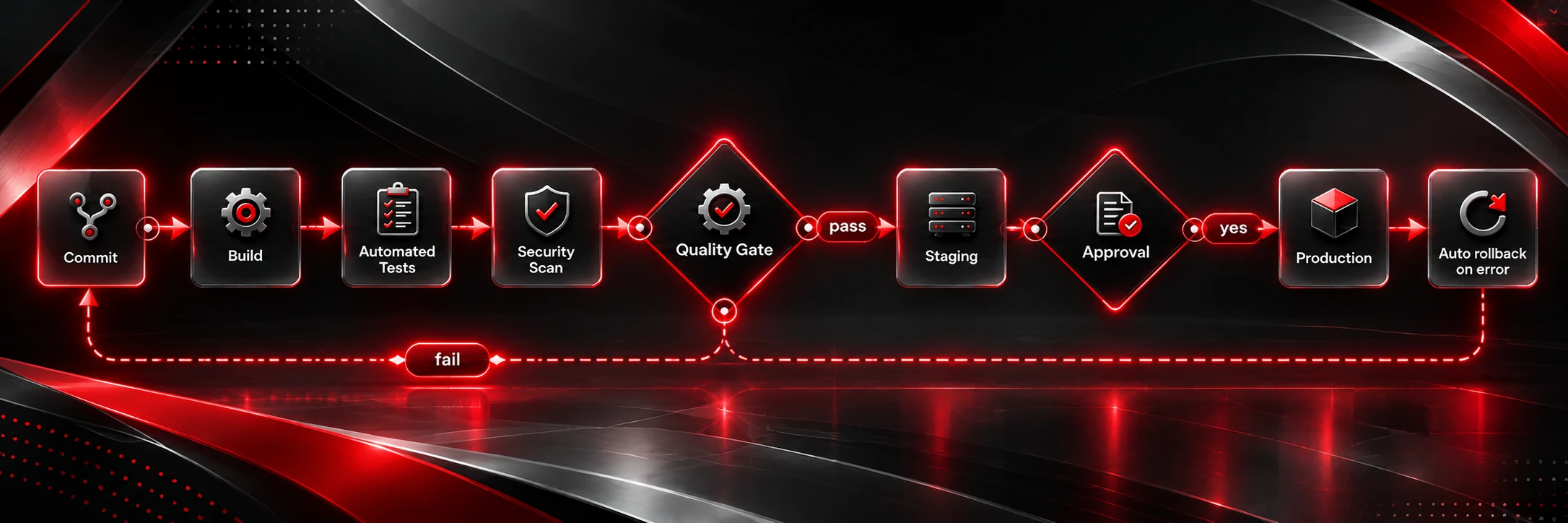
Teams stuck in slow, scary releases usually have the same root problems: manual steps, no automated testing, and no safe rollback. We fix the pipeline and the practices around it: automated CI/CD, testing gates, and deployment patterns that make releases routine instead of an event. The tooling matters; the habits matter more.
Servers no one can rebuild, slow manual releases, fragile scripts and teams waiting on each other.
Releases depend on someone running commands by hand in the right order.
Each team's CI/CD setup looks different, making shared standards hard to apply.
Changes reach production without consistent review or quality gates.
We fix the pipeline and the practices around it: automated CI/CD, testing gates, and deployment patterns that make releases routine instead of an event. The tooling matters; the habits matter more.
Review current build and release processes to find the real bottlenecks.
Automated CI/CD with testing gates that make releases routine instead of risky.
Deployment patterns and safe rollback built into every release.
Practices, not just tooling, so the improvements stick after we leave.
Everything is defined as code. Container images do not change once built, network rules are tight and every step is logged.
Understand the business goal, current environment, risks and constraints before any design work begins.
Design the target operating model, controls and integration points so the solution fits how the business actually runs.
Build and configure the solution using repeatable, reviewed engineering practices, not one-off manual work.
Test against real scenarios and security requirements before anything reaches production.
Hand over documentation, runbooks and support so the client team can run the result with confidence.
Each step ends with a written result and a clear yes or no before the next one starts.
We write shared Terraform modules, move apps into containers, automate each release step and hand over runbooks.
Review existing CI/CD processes, release cadence and pain points.
Define a consistent pattern for build, test and deployment.
Build pipelines that replace manual deployment steps.
Transfer knowledge so the team can maintain and extend the pipelines.
Ship safely many times a day, with quick rollback, the same setup for every developer and clear logs.
Manual steps are replaced with pipelines that run the same way every time.
Pipeline design follows one pattern teams can reuse and maintain.
Quality gates and review steps apply consistently before changes reach production.
Open, proven tools chosen because they are easy to maintain, secure and pleasant for developers to use.
Short answers on containers, pipelines and who runs what after handover.
Usually both. Great tooling with bad practices still fails. We address both.
Yes, we improve what you have far more often than we rip and replace.
An Azure DevOps to GitHub migration moves repositories with full history using GitHub Enterprise Importer, converts Azure Pipelines to GitHub Actions workflows, moves work items where needed and rebuilds branch protection, secrets and service connections. Teams move in batches so delivery does not stop.
| Source and what it covers |
|---|
New to iNET SYSTEMS? Meet our founder, see how we work, read the FAQs or start with an AI Security Readiness Assessment.
Questions are not stored. Avoid sharing confidential information. Privacy Policy
