
Unmonitored AI workflows
Deployed AI agents and integrations run without regular review of behavior or cost.
AI in production isn't set-and-forget. Output quality drifts, token costs sneak up, and real usage surfaces edge cases the pilot never did. We keep production AI healthy: monitoring quality and cost, watching for drift and misuse, and tightening or loosening guardrails as trust and usage evolve. The kind of ongoing care most teams don't have the bandwidth for.
Managing 24/7 incident response, timely security patching, uncontrolled cloud spend, and complex multi-platform estates.
Deployed AI agents and integrations run without regular review of behavior or cost.
Agent and connector permissions are not periodically reassessed as usage grows.
AI workflows launch and then stay untouched, even as needs change.
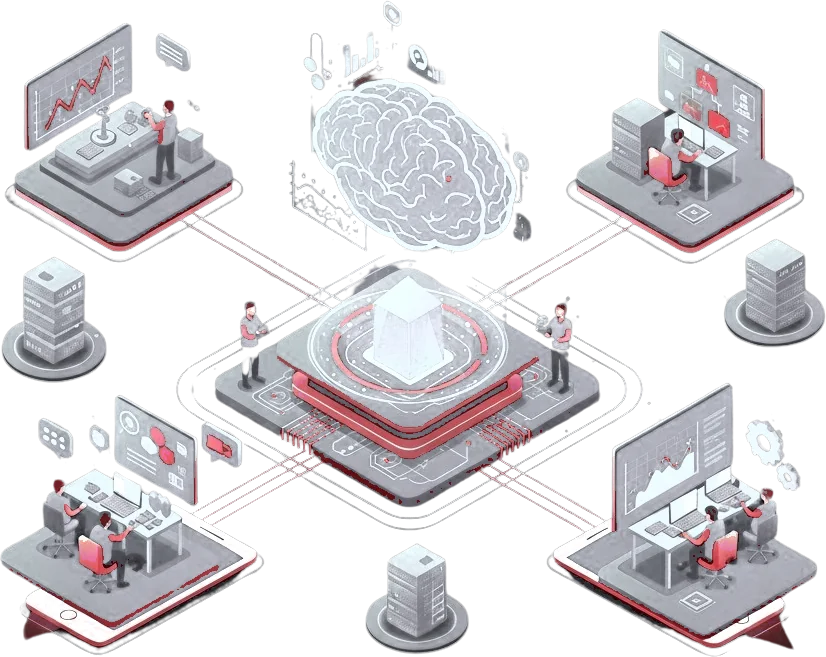
Output quality drifts, token costs sneak up, and real usage surfaces edge cases the pilot never did. We keep production AI healthy: monitoring quality and cost, watching for drift and misuse, and tightening or loosening guardrails as trust and usage evolve. The kind of ongoing care most teams don't have the bandwidth for.
Output quality, token cost and usage patterns tracked after launch, not just at go-live.
Agent and tool access reviewed periodically as usage and trust evolve.
Guardrails tightened or loosened based on real production behavior.
Ongoing care for the edge cases and drift that a pilot never surfaces.
Continuous health telemetry, automated alert deduplication, disciplined runbooks, and executive reporting visibility.
Understand the business goal, current environment, risks and constraints before any design work begins.
Design the target operating model, controls and integration points so the solution fits how the business actually runs.
Build and configure the solution using repeatable, reviewed engineering practices, not one-off manual work.
Test against real scenarios and security requirements before anything reaches production.
Hand over documentation, runbooks and support so the client team can run the result with confidence.
Every phase ends with a documented deliverable and a clear go/no-go decision before the next one starts.
Structured onboarding, baseline configuration hardening, 24/7 monitoring, monthly FinOps reviews, and regular posture reviews.
Review what agents, integrations and tools are already deployed.
Track behavior, cost and performance of AI workflows.
Reassess agent and tool permissions on a cadence, not just at launch.
Evolve workflows as needs and usage patterns change.
Free your core product team to innovate while certified engineers ensure uptime, security patching, and platform reliability.
AI workflow behavior, cost and performance are reviewed on an ongoing basis.
Agent and tool permissions are reassessed instead of left unchanged indefinitely.
AI workflows evolve through a maintained backlog instead of standing still.
Production-grade observability and automation platforms providing immediate alerting and reliable telemetry.
Clear information regarding support boundaries, response times, and handover expectations.
Yes: quality drift, cost creep and new edge cases are the norm, not the exception.
Output quality, token cost, guardrail effectiveness, and unusual or unsafe usage patterns.
Questions are not stored. Avoid sharing confidential information. Privacy Policy