
Inconsistent monitoring
Some resources are watched closely, others are not monitored at all.
The unglamorous day-2 work (patching, monitoring, cost control, tuning) is exactly what keeps a cloud environment healthy, and exactly what busy teams let slide. We take it on: continuous monitoring, proactive maintenance, cost reviews, and steady improvement, so your environment stays as good as the day it launched instead of degrading month by month.
Managing 24/7 incident response, timely security patching, uncontrolled cloud spend, and complex multi-platform estates.
Some resources are watched closely, others are not monitored at all.
Backups exist but no one can confirm they would actually work in a real recovery.
Cloud spend grows gradually with no regular review to catch avoidable waste.
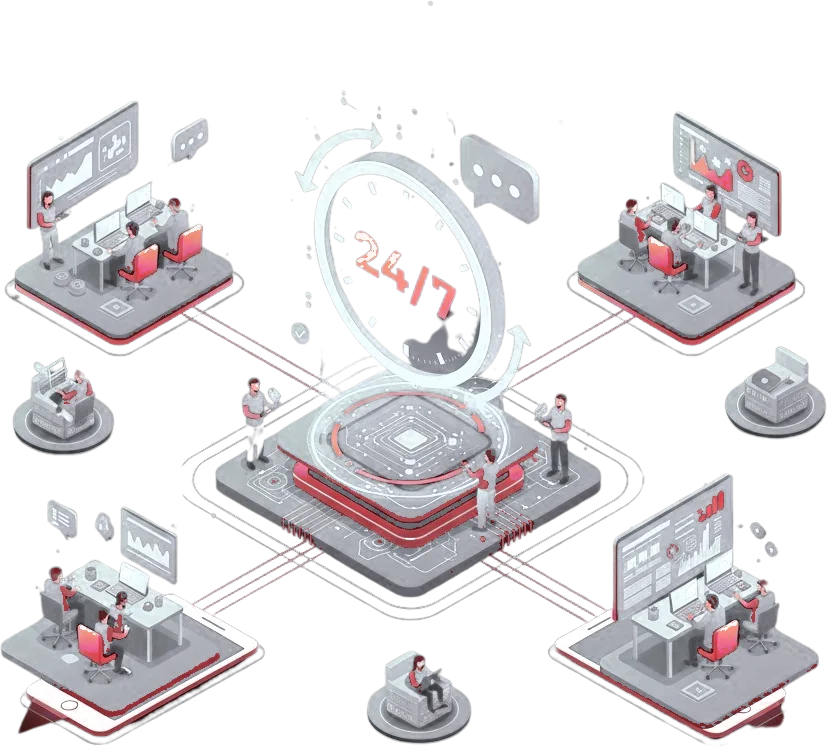
We take it on: continuous monitoring, proactive maintenance, cost reviews, and steady improvement, so your environment stays as good as the day it launched instead of degrading month by month.
Continuous monitoring across Azure, AWS and GCP so issues surface before users notice.
Backup and recovery kept current as workloads and requirements change.
Patching that follows an agreed process, with no surprise changes to your environment.
Regular cost reviews so spend doesn't quietly creep back up.
Continuous health telemetry, automated alert deduplication, disciplined runbooks, and executive reporting visibility.
Understand the business goal, current environment, risks and constraints before any design work begins.
Design the target operating model, controls and integration points so the solution fits how the business actually runs.
Build and configure the solution using repeatable, reviewed engineering practices, not one-off manual work.
Test against real scenarios and security requirements before anything reaches production.
Hand over documentation, runbooks and support so the client team can run the result with confidence.
Every phase ends with a documented deliverable and a clear go/no-go decision before the next one starts.
Structured onboarding, baseline configuration hardening, 24/7 monitoring, monthly FinOps reviews, and regular posture reviews.
Review existing monitoring, backup and patch practices.
Apply monitoring uniformly instead of ad hoc configuration.
Confirm backups are actually restorable, not just scheduled.
Add a recurring cost review to catch drift.
Free your core product team to innovate while certified engineers ensure uptime, security patching, and platform reliability.
Monitoring applies uniformly instead of covering only what someone remembered to configure.
Backup coverage is reviewed on a schedule, not assumed.
Scheduled cost reviews catch drift before it becomes a budget problem.
Production-grade observability and automation platforms providing immediate alerting and reliable telemetry.
Clear information regarding support boundaries, response times, and handover expectations.
Monitoring, patching, cost optimization, security posture upkeep and incremental improvement.
Changes follow an agreed process, with no surprise modifications to your environment.
Questions are not stored. Avoid sharing confidential information. Privacy Policy